The Deal You Never Had a Chance to Win
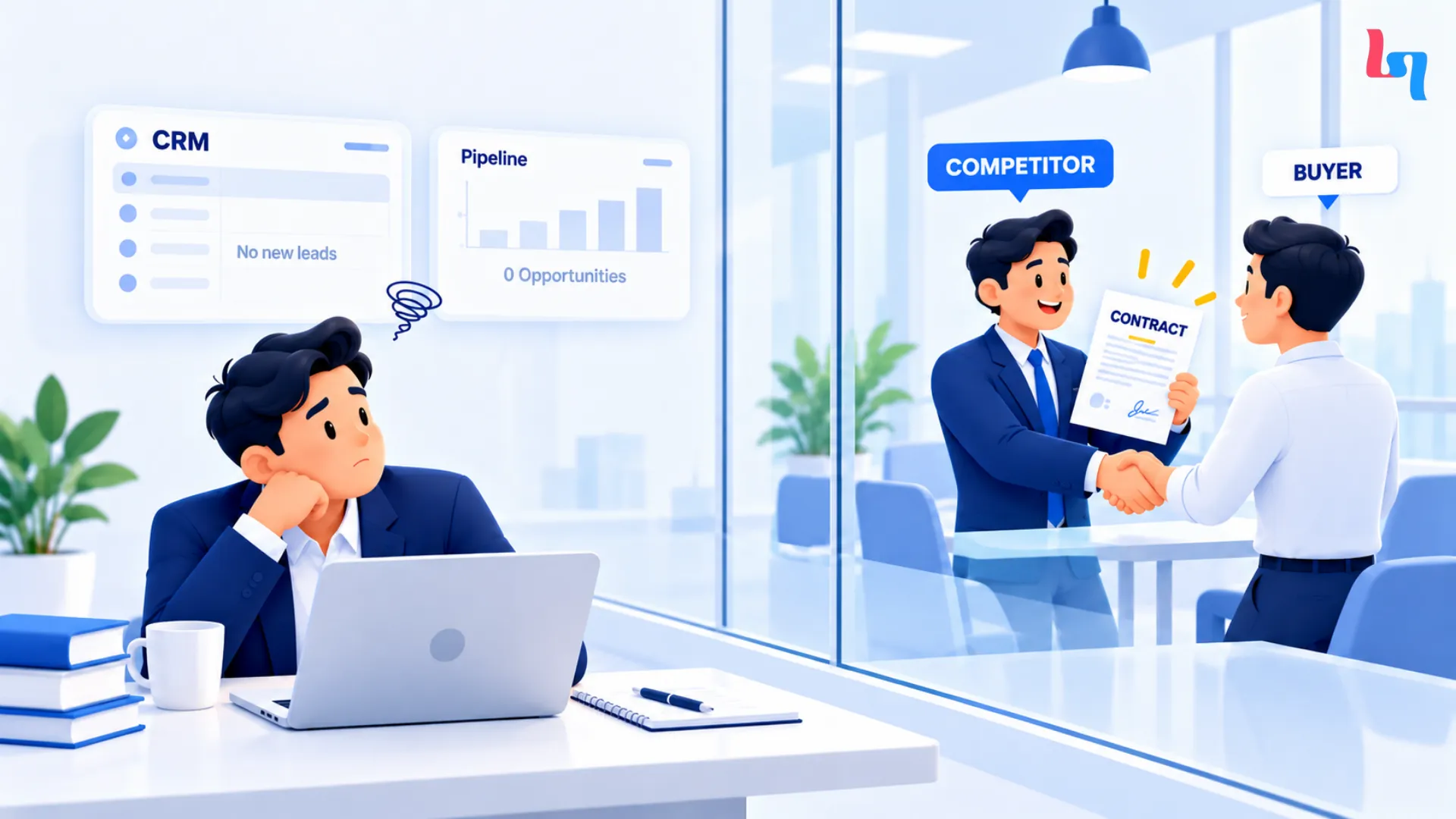
You find out that the company you’ve been trying to get in touch with has actually struck a deal with your competitor.
My first thought would be to go back to the CRM.
Have we missed an enquiry? Have we missed an email? Have we missed a follow up?
But the company never got in touch with us.
They’d been comparing vendors for months, reading reviews, following the industry experts on LinkedIn and getting recommendations from people in their network. By the time they got in touch with a sales team they were already very much in a position to know who they wanted to work with.
This occurs more frequently than businesses are aware of.
According to TrustRadius’s 2025 research, 82% of tech buyers had a product in mind when they created their shortlist and 70% went on to buy that product.
I’ve come to the realisation that a prospect can be interested in our services without ever actually going on our site or filling in a contact form.
That’s why I want to look at how B2B buyers go about selecting a vendor, what their research can tell us and how a smaller business can get seen before the buyer starts to reach out.
Why B2B Buyers Often Choose Their Shortlist Before Contacting Sales
Your first sales meeting might well be after the buyer has already formed an opinion.
Many companies measure lead generation through inquiries, booked meetings, and quotations. But these numbers reveal little about what buyers did before reaching out.
According to Gartner’s 2025 B2B buyer survey, 61% of buyers preferred a purchasing experience without a sales representative.
A manufacturer looking at an ERP system. The ops head is looking at the inventory issues, the finance head is looking at the cost implications and IT is looking at the integration requirements.
By the time they’re talking to the vendors it may already be pretty clear which of the solutions are going to be the ones they go for.
To get to the root of how those preferences are formed I’d talk to five of the more recent customers. What prompted their search? Where did they go to look for information? Which companies were they considering first?
If several customers mention implementation costs, publish a practical guide explaining pricing factors, common overruns, and budgeting mistakes.
The idea is to answer the questions buyers have before they’re ready to contact sales.
The Invisible B2B Buyer Journey: Where Your Competitor Gets Discovered First
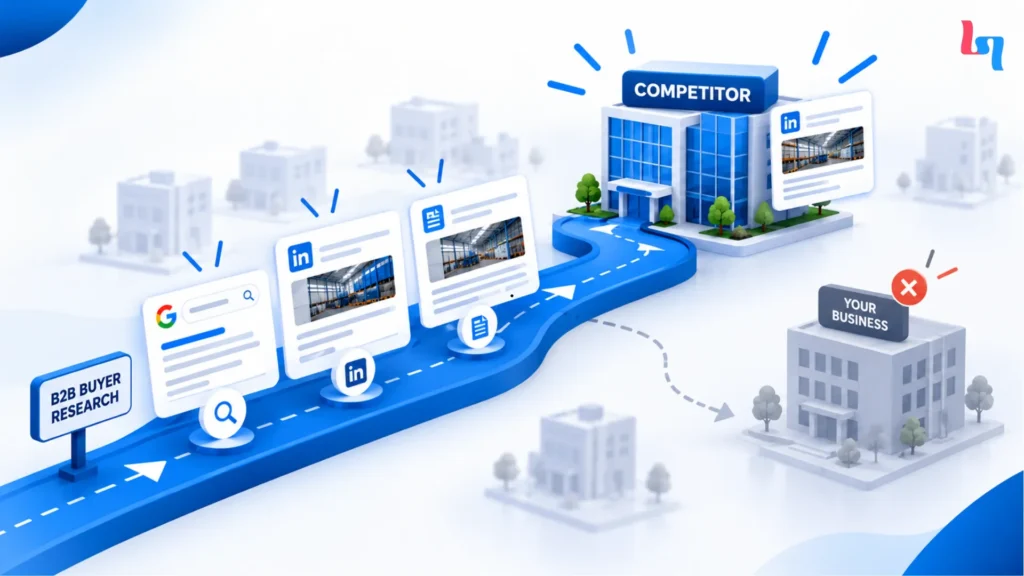
Your future customer could well know your competitor without ever having spoken to them.
Consider a logistics company struggling with delayed shipment updates.
Think of a logistics company that’s having problems with getting their shipment updates out on time.
The manager shares it with IT, where someone discovers a LinkedIn post discussing warehouse integration challenges.
Soon, the team starts comparing solutions and asking industry contacts for recommendations. No vendor has received an inquiry yet.
According to McKinsey’s 2026 Global B2B Pulse Survey, B2B buyers use an average of 10 channels during their purchasing journey.
This means your future customers may find out about solutions via a number of different channels prior to even contacting you.
For a logistics software company I’d start with one in-depth article on warehouse integration issues, the business impact of those issues and potential solutions.
Then I’d be creating the LinkedIn posts around shipment visibility, inventory sync and implementation cost.
Each piece would address a different question and would help the prospective buyer to dig deeper into the subject.
This gives the prospect far more scope to discover your expertise prior to them getting into the vendor comparison stage.
Seven B2B Buying Signals You Can Monitor Before Prospects Contact You
Your next customer may show signs of needing your services before they contact you.
Businesses don’t always go out and announce that they’re looking for a new vendor. You can however get a pretty good idea of what they might be looking for by looking at changes in their hiring, their expansion plans or indeed their day to day running of the business.
Here are seven signs to look for.
1. Hiring for New Roles
If a retailer is starting to employ automation engineers then it’s likely they’re looking to automate some of their own work. Check out the job descriptions to see what they’re trying to improve and whether your services would be of any use.
2. Business Expansion
When a manufacturer opens a new factory the issue of managing inventory and deliveries across various sites can become quite a challenge. That’s where a company providing an inventory management or logistics solution can come in.
3. Leadership Changes
A new CIO might be in the market for a bit of an upgrade to the technology stack. You can get a good indication of what they’re looking for by reading their interviews and the various announcements they make.
4. Interest in Industry Content
If someone’s regularly asking questions on Linkedin about cloud costs, they’re probably looking for ways to cut their spend. Don’t send them a salesy pitch. Instead send them a useful tip or a useful resource.
5. Visits to Service or Pricing Pages
People looking at your pricing, comparison or service pages may well be looking at a number of different solutions. Use your website analytics to see which pages are generating interest and make sure that the information they need is easily accessible.
6. Changes in Industry Regulations
New regulations can be the catalyst for businesses to look at their operations. The updated data security requirements are a case in point in that they may well be the trigger for a company to go and look at its security arrangements, which in turn would create opportunities for the cyber security providers.
7. Questions About Your Services
If someone is asking you about pricing, installation time or whether your solution is compatible with their current systems then they’re very likely in the process of making a purchase decision. That’s the time to make the call or to give them some more information to assist them in their decision.
However every signal doesn’t mean that someone is ready to buy.
The company might be planning to employ people in the future, but won’t have any immediate requirements. Or they may be asking for a plan to implement, and this could be the start of a requirement.
Try to target companies that fit your ideal customer profile, and clearly have a requirement. This will mean that your sales team are only speaking to the right prospects, and aren’t just having to speak to every company in some activity.
How to Identify and Prioritize High-Potential B2B Accounts
Targeted list of 40 companies is far better than a wide list of 500 contacts.
If you provide cybersecurity services in Financial Services then start by identifying 40 companies which are similar to your best clients. You can target them based on size, sector, tech requirements and recent activity.
A business looking to increase their digital banking solutions may have new security concerns. We would simply score the companies in order.
| Criteria | Score |
|---|---|
| Company and industry fit | 0–5 |
| Relevant business changes | 0–3 |
| Observable interest | 0–3 |
| Recency of the signal | 0–2 |
While a score of 11 out of 13 is worthy of attention, you may not want to purchase just yet.
Each week, look at the top 10 scoring accounts. Think about what pain points they may be experiencing, who the decision makers are and what would be a useful next step.
Some accounts may benefit from some education, whereas others may just want a tailored introduction.
Compare the scores to your monthly sales opportunities to help improve the criteria.
The aim is to enable your sales team to spend more time on the businesses that are relevant to them and less time sending messages to prospects that aren’t.
How to Make Your Business Visible Before Buyers Start Comparing Vendors
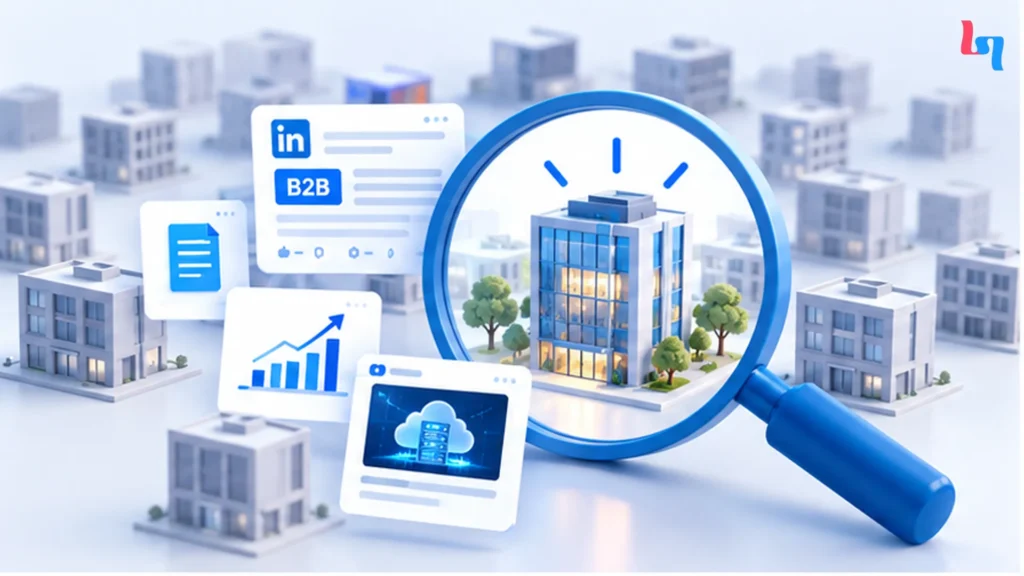
Buyers need a reason to believe in your expertise before they will even consider your services.
Consider two cloud migration consultancies.
One is basically just a vehicle for publishing company wins and promotional content. The other is all about explaining migration costs, the risks of downtime and the various technical pitfalls you can run into.
Both may be equally capable really, but the second one provides the buyer with something of value as they’re in the process of researching.
Here’s how I’d go about building that visibility.
1. Answer Real Customer Questions
Start with the questions that your sales and delivery teams are asking on a regular basis.
For a cloud consultancy these might be migration costs, application dependencies or cloud vs hybrid.
A useful B2B content marketing strategy turns these questions into practical articles with examples and clear explanations.
Build your content calendar around 10 common customer concerns rather than general industry topics.
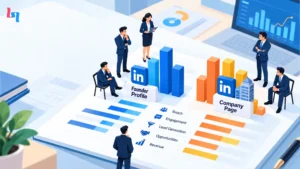
2. Share Leadership Experience on LinkedIn
Founders and senior professionals make decisions that potential customers can learn from.
A CTO explaining why a particular app shouldn’t go to the cloud is a much more effective demonstration of expertise than some other project announcement.
The 2025 Edelman–LinkedIn Thought Leadership Impact Report found that 63% of surveyed hidden decision-makers in the US spent more than an hour weekly consuming thought leadership.
A focused LinkedIn marketing strategy can help these insights reach relevant professionals.
Ask one senior expert to share a difficult decision, a mistake avoided, or a useful lesson each week.
3. Address Different Decision-Makers
A CFO is looking at cost, a CTO at architecture and security and the Ops people will be looking at business disruption.
Create separate resources to deal with these issues rather than having one service page attempt to cover all the bases.
4. Make Your Services Easy to Understand
Buyers shouldn’t need a meeting to understand what you can do.
Explain your services, your project approach, your technical requirements and your relevant customer examples.
Review your website to make sure there are no unanswered questions that might put a potential buyer off.
5. Share Content Where Buyers Participate
Publishing an article is of no use whatsoever if the relevant buyers never see it.
Share some useful insights in the LinkedIn groups, professional communities and industry newsletters.
Focus on meaningful conversations rather than impressions alone.
When buyers repeatedly encounter helpful information from your company, they have more reasons to recognize it during vendor evaluation.
How to Turn Early Buyer Interest Into Qualified Sales Conversations
A business signal is an opportunity to initiate a conversation, not an opportunity to pitch.
Imagine a manufacturer announcing a new plant.
A software vendor emails their Procurement Director straight away with a offering of inventory management software and a request for a demo.
But there’s no evidence that the manufacturer actually requires another system.
I’d start with the expansion. Is the company adding production lines, opening up warehouses or going into a new market?
If you’ve got multiple facilities involved then inventory reconciliation could become a potential issue. That gives the provider something to talk about.
According to Forrester’s 2025 B2B Trust Research, 82% of B2B buyers trust coworkers and management as sources of information.
This is why sales outreach should be offering something that the buyer would find useful enough to talk about with their own team.
A better opening message could be:
“Well done on the new facility. Going out to multiple locations can present some inventory reconciliation issues so we’ve put together a very short checklist of the more common integration issues that your team may well come up against.”
If they respond then go on to find out what their requirements are before you even mention your solution.
If not, keep the research and come back to the account when something of relevance does occur.
Useful sales conversations start with a legitimate business reason to get in touch.
A 30-Day Plan to Get in Front of B2B Buyers Earlier
Before you go any further and start spending more on marketing, check that you’re actually reaching the right buyers.
A tiny B2B team can test their approach in 30 days using customer research, publicly available information and the tools they already have.
Week 1: Identify Relevant Accounts
Review your last 10 successful customers and your last 10 lost opportunities.
Look for patterns in the industry, the size of the company and the nature of the purchase. Use those to build up a list of 30 to 50 accounts that are appropriate.
Research recent announcements, hiring activity, and expansion plans to understand why each company might need your expertise.
By the end of the week, you should have a focused account list with clear reasons for including each business.
Week 2: Understand Buyer Questions
Talk to the sales, technical and customer teams about the issues that prospects are most likely to raise.
For an ERP provider these could be downtime, data migration, training and integration costs.
Turn those concerns into 10 content ideas and then pick four that are most relevant to the purchase decision.
Week 3: Publish Useful Content
Create one detailed article and three LinkedIn posts to address the relevant buyer questions. For instance one ERP migration article might cover the implementation risks, the LinkedIn posts would be about the downtime planning, the data validation and the budgeting.
A properly co-ordinated content marketing process will see each piece of content offer something different.
Share it via appropriate industry conversations and record any meaningful responses.
Week 4: Review and Improve
Look at which topics were generating relevant discussion and whether any of the target accounts were more interested than others.
Update your account priorities and work out where further research or content is required. Some may be candidates for direct contact, others may require a bit more time and some useful info.
After 30 days you’ll have a much clearer picture of your buyers and a repeatable process to improve.
How to Measure Demand Generation When Buyers Are Still Anonymous
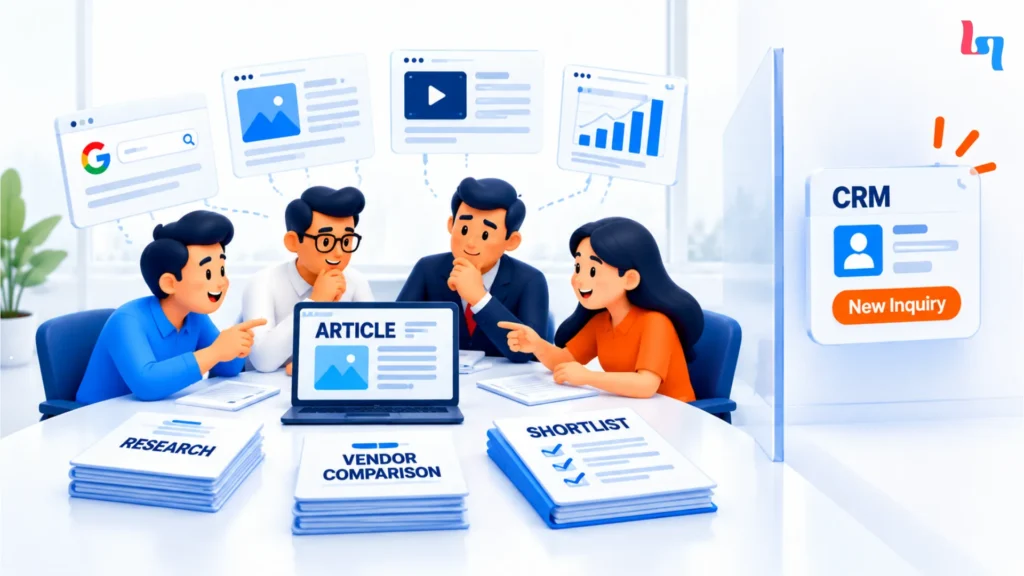
Your content may lead to a sale without you getting any credit for the sale.
Imagine an IT services company writing an article about ERP implementation failures.
A finance manager came across it via Google and passed it on to the team. A couple of weeks later a member of the company turned up on the provider’s service pages. Eventually procurement get a proposal.
The article may have been a factor in the decision but the CRM only records the final inquiry.
I’d divide it into three phases to get a better understanding of this.
1.Visibility
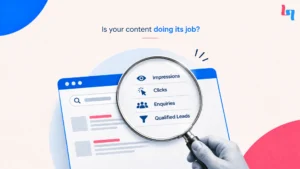
Watch the relevant search impressions, organic traffic, branded searches and engagement with the educational content. These metrics tell you whether people are finding your expertise.
2. Consideration
Track meaningful service page visits, enquiries that reference a specific piece of content and feedback on how the prospect found you.
Ask the buyers which of the articles or recommendations they used in their evaluation of the vendors.
3. Commercial Results
Measure qualified opportunities, proposal requests, reported shortlist inclusion and new customers.
For example, Banter Marketo’s cybersecurity SEO case study reports monthly organic traffic increasing from 1,158 to 9,428 between September 2019 and September 2023, approximately 8.1 times its starting level.
Traffic growth in itself doesn’t necessarily equate to a revenue impact so you need to look at those figures in conjunction with the qualified inquiries and the sales results.
A monthly review will help you work out which topics are attracting the relevant buyers and which are generating the best opportunities.
Five Mistakes That Let Competitors Influence Your Buyers First
Sometimes buyers choose competitors because they understand their services better.
Five common mistakes can contribute to that situation
1. Publish content that buyers don’t need. Company announcements have their place, but buyers also need practical explanations and comparisons. Build your content around the questions that your customers are actually asking.
2. Treating engagement as purchase intent. A like on Linkedin doesn’t mean that person is going to buy. You need to look for actual questions and stronger evidence of interest.
3. Ignoring the other decision makers. IT, Finance, Procurement and Operations will all have a bearing on the same purchase. You have to address their respective concerns.
4. Hiding the basic service information. Tell the buyer what you can do, how you do it and what experience you have so they can make up their own mind about your business.
5. Measuring only immediate leads. Track visibility, buyer conversations and qualified opportunities in addition to form submissions.
Before increasing your advertising budget or outreach volume, check whether these problems are limiting your existing marketing efforts.
Better information and clearer positioning may help you make more effective use of the audience you’re already reaching.
What Should You Change Before Your Next Competitor Wins the Shortlist?
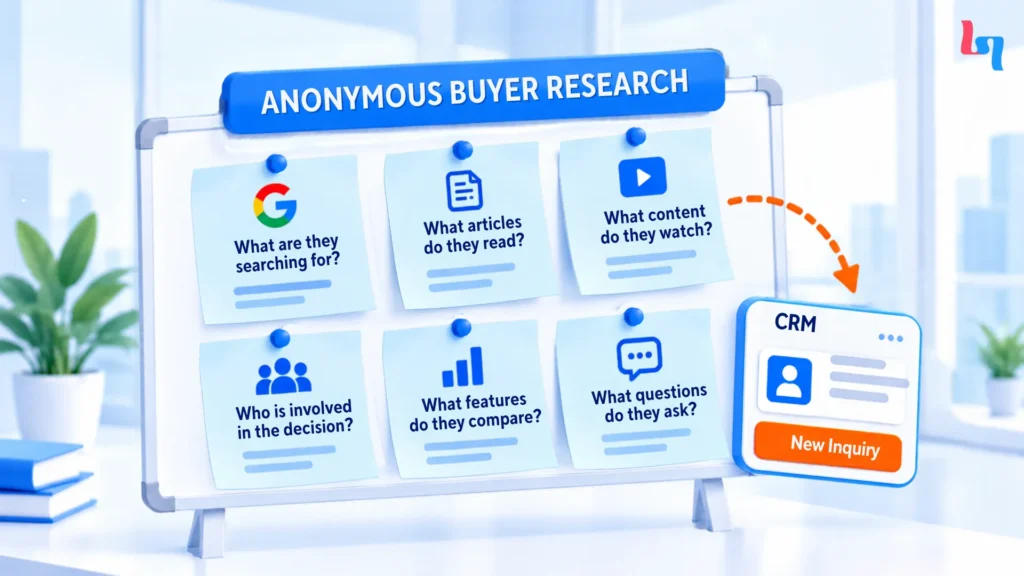
Think about the customer right at the outset. They picked your competitor rather than you because they hadn’t come across your offering at all.
To avoid missing out on similar opportunities you need to first understand where your ideal customer is going to look for a solution and what factors are going to influence their decision.
Talk to the people who have recently bought, find out what problems they were looking to solve and then create content that answers those questions.
Share these insights via LinkedIn, in the various industry discussions and via targeted outreach to potential customers. That way they’ll come across your expertise as they’re in the process of comparing vendors.
At Banter Marketo we help B2B businesses build that visibility via thought leadership, useful content and targeted professional relationships.
When your next customer starts to research solutions, will your business be one of the ones they look at?
Frequently Asked Questions
1. How Can You Identify B2B Buyers Before They Contact Sales?
Define your ideal customer profile and research relevant company developments, including hiring, expansion, and leadership changes. Use these signals to identify accounts worth investigating before outreach.
2. What Are the Strongest B2B Buying Intent Signals?
Questions about pricing, implementation, technical compatibility, and purchasing timelines often indicate stronger commercial interest than general content engagement. Evaluate them alongside business fit.
3. What Is the Dark Funnel in B2B Marketing?
The dark funnel includes private recommendations, internal discussions, and untracked content sharing that influence purchases but aren’t fully visible in marketing analytics.
4. How Does LinkedIn Thought Leadership Influence B2B Purchase Decisions?
Relevant insights, technical explanations, and practical examples help buyers understand a professional’s expertise before contacting sales.
5. Can Small B2B Businesses Generate Demand Without Expensive Software?
Yes. Start with customer research, targeted accounts, SEO content, LinkedIn engagement, and relevant outreach. Measure meaningful conversations before investing in additional tools.