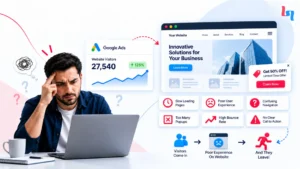

Your LinkedIn post gets 15,000 views, hundreds of reactions and comments, and a few shares. You even gain some new followers.
But when your sales team checks how many leads came from the post, there are only two. And neither matches your ideal customer profile.
So, what has your LinkedIn B2B lead generation actually achieved?
You’ve had many views, but they didn’t bring any conversations with the right buyer.
We have seen at Banter Marketo how easy it can be to get caught up in the number of likes, impressions and followers.
While this can seem like positive results, it doesn’t guarantee you are generating potential customers.
For me, when generating B2B leads on LinkedIn, I focus on not just getting views but ensuring that my content is being shown to the right people, to generate real sales opportunities.
I would start by asking a different question. Are we finding the right people who would be interested in our services?
For me, an effective LinkedIn strategy is about finding the target audience, providing them with information that they find interesting and useful, and building their authority so that they have a reason to reach out and work with you.
Because, frankly, 500 views from the right prospect are worth more than 15,000 views from people who have no interest in buying your services.
Now, what are the chances that your content is being seen by the wrong people? To answer this question, we first have to take a look at who engages with your posts.
Why Is Your LinkedIn Content Getting Attention but Not Generating Leads?

You’ve created a post that receives thousands of impressions, comments, and you’re gaining new followers.
Seems great! However, when looking at how many quality B2B leads are generated, the story may change.
Not every post will attract a large number of views, but if you are attracting potential customers and a reason for them to trust your business, then you are on the right track.
According to a study undertaken by LinkedIn and Ipsos for the 2025 B2B Marketing Benchmark, 94% of B2B marketers surveyed agreed that building trust is the most important factor for B2B brand success.
We’ll begin by taking an IT services company that posts a trending AI announcement on LinkedIn. The post will gain engagement from developers as well as students and technology enthusiasts commenting.
However, how many of these people actually need the services the company provides?
CIOs will likely be looking at buying this company. They are looking at infrastructure costs, security risks and how well new technologies will fit within their business.
While they may be interested in the trending AI post, does it actually answer any of the questions they have?
At Banter Marketo, we would look to create content that answers the questions they want answered. We would focus on creating content that highlights issues they are having within their business and how our expertise can help them.
We would make sure that the posts would fit into our ideal customer profile and focus on LinkedIn B2B lead generation.
This would make it easy for those interested to look into our services.
Having more impressions is great, but we want the right people looking at our content. People who will trust our business and are interested in our offering.
So, what does an effective LinkedIn B2B lead generation process actually look like, and how does it turn initial interest into a sales opportunity?
What Does Effective LinkedIn B2B Lead Generation Actually Look Like?
You’ll generate views, but once your audience has viewed your post, they may decide they found the content useful.
They will then view your profile and see what services you provide. They may not reach out straight away, but they know more about what you offer.
For me the main aim of generating leads from LinkedIn for B2B is to connect with those who are likely to need your services.
You want to answer their questions and provide helpful information so they feel they can trust your expertise and consider your business when they’re ready to purchase.
According to LinkedIn’s 2025 research, 77% of B2B marketing leaders in the survey say that buyers look at brands through their professional networks.
Take a CIO who’s looking into modernizing their cloud infrastructure. They come across a LinkedIn post about rising cloud costs and decide to check the author’s profile.
From there, they read a relevant case study and eventually book a consultation to learn more about the company’s services.
What started as a LinkedIn post has now turned into a possible sales opportunity.
At Banter Marketo, I would focus on making it easier for potential buyers to take these steps.
With a clear LinkedIn content marketing strategy, I would share useful industry insights, support them with relevant case studies, and give interested readers an easy way to explore the business.
But not everyone who follows your page or sends an enquiry is a qualified lead.
I would also look at whether they actually need the services, have a say in purchasing decisions, and are interested in buying.
And that raises a crucial question: Are you creating content for the people who engage with your posts or the decision-makers who can actually become your customers?
Define Your Ideal B2B Buyers Before Posting on LinkedIn

Knowing who your target audience is on LinkedIn is a great start. However, do you know who is involved in the decision-making process when a company chooses to use your services?
Many B2B companies will only focus on making sure they are targeting the right companies.
For example, if your business provides IT services, one person (CIO) may need to know how secure the system is, while another person (CFO) will likely need to know how much it costs and whether it makes financial sense to invest.
Would they find the same content useful on LinkedIn?
Forrester’s 2026 State of Business Buying report states that on average there are 13 internal stakeholders and 9 external influencers involved in a B2B buying decision.
Imagine you are a cyber security company looking to engage enterprise customers on LinkedIn. You may create generic content around AI security but does it answer the questions your potential buyers have?
A CISO will want to know how they can avoid unauthorised access to AI agents.
An IT leader may have questions around compliance.
A CFO will be more concerned about the financial risk. Each person will have different questions about the service.
I would start by understanding who your buyers are.
We need to know what industries and company sizes we are targeting. Who is involved in the purchasing process?
What issues do they have and what would make them search for a solution? This information will help us understand who our ideal customer profile (ICP) is and give us a targeted digital marketing strategy.
According to a survey by Gartner in 2026, 67% of buyers surveyed prefer to buy without a sales rep. Buyers should be able to find useful information and compare their options.
With an understanding of who you are targeting and what is important to them, we can start creating content on LinkedIn.
But knowing your audience is only half the equation. What should you publish to turn that understanding into genuine buying interest?
Build Authority Through LinkedIn Content That Creates Buying Intent
Once you know who your target audience is, you need to think about how to make them build trust in your business.
While publishing industry updates or LinkedIn posts about what’s trending may get you some engagement, will this be helpful for your potential buyers?
Your content needs to help them understand their issues, compare solutions and understand that your business has the expertise to help.
According to the 2025 Edelman–LinkedIn B2B Thought Leadership Impact Report, 79% of ‘stealth influencers’ surveyed in the US said they were more likely to back proposals from companies that regularly publish quality thought leadership content.
This is because there may be more than one person involved in a B2B purchase.
If you are targeting enterprise CIOs and CISOs with your cybersecurity business, you may get lots of engagement from a general LinkedIn post about AI security.
However, by providing a detailed post about how unauthorised access to AI agents could put sensitive systems at risk, you are providing something that will be more useful for your buyers to consider for their infrastructure.
Answer any questions they may have.
For a cybersecurity company this could be a blog series answering the most common questions about the risks of allowing too much access to your AI agents.
This could be followed by a blog series about the technical differences between controlling access, identities and AI governance.
As they start looking for solutions, showcase how these risks can be overcome. This can be done with implementation frameworks, case studies and expert opinions.
Create content which will best deliver your message.
Maybe a LinkedIn carousel to simplify a complicated technical process. Or a short video from an expert explaining why a system was designed in a particular way.
If they want to know more, include a link to a relevant article or case study as part of your content marketing strategy.
B2B content should provide value to help buyers find answers. Not every post on LinkedIn should be a sales pitch.
Every post should be answering a question they may have and giving them confidence that your company is expert.
However, even if you are building confidence with your content, what happens when they click on your LinkedIn profile?
This is where you need to give them a clear next step.
Convert profile visits into business
enquiries

A prospective buyer has clicked through to your LinkedIn post and found the insight helpful. They have followed you to your LinkedIn profile. Now do you have a strong reason for them to reach out?
This is often where opportunities are missed.
Profiles can showcase lots of professional experience, qualifications and roles but fail to tell the buyer what your business actually helps with.
Take, for example, a founder of a cloud consulting business whose headline says: “Founder | Entrepreneur | Technology Enthusiast.” This tells them who you are professionally but doesn’t show them much value.
Now take another headline: Helping Enterprise IT Teams Reduce Cloud Costs, Strengthen Security and Modernise Infrastructure.
This headline is telling them what their business will benefit from.
If I were optimizing my LinkedIn profile at Banter Marketo I would ensure that my headline reflects the buyer, my About section tells them what expertise I have and includes some credible case studies or resources around my services.
If they do click through to our website then we want to ensure that they see the same message, that we have proof that we can deliver and a clear call to action to request a consultation.
Wherever possible, I would set up tracking so we know how many people were visiting our website and making enquiries based off our profile.
This can be done by using tagged links and CRM data.
It is only worth attracting the right buyer if they can see a reason to move forward with us.
If they are interested but not ready to make an enquiry then meaningful conversations on LinkedIn become important
Move LinkedIn Engagement Into Meaningful Sales Conversations
You may have someone interacting with your content on LinkedIn but they may still be researching and looking for solutions to their business problem.
Therefore, you cannot just post content on LinkedIn and expect to gain leads.
While you can create meaningful connections by receiving comments, connection requests or chats about an issue in their industry, if you’re always pushing for a sale the potential interest can be lost.
If a CIO comments on your post about increasing cloud infrastructure costs, rather than pushing your cloud consulting services, I would ask them what pressures they’re facing with regard to costs and provide them with a technical resource to help them research further.
This helps us understand their situation better and whether there is a real business need.
At Banter Marketo we would follow up with a consistent personal approach. We would look at who was engaging and what has interested them.
We would also look at the resources they could benefit from. Once they begin to discuss a specific business problem it makes suggesting a consultation or assessment much more relevant.
Trust plays a large role in this.
According to Forrester’s 2025 research, 82% of B2B buyers trusted their colleagues and management for information. We would ensure that any relevant conversations are logged into the CRM.
We would also ensure that they fit our ideal customer profile and work with the sales team to follow up.
This helps us understand who is genuinely interested and who may be ready to look at a solution.
We are not looking to upsell here but to understand when we are having productive conversations.
As you begin to gain interest through your conversations you may want to consider if you are getting enough high-quality leads from organic activity on LinkedIn.
Maybe paid campaigns can help you reach more of the right buyers?
Use Organic and Paid LinkedIn Lead Generation Together

When you start getting potential buyers engaging on LinkedIn, using organic and paid LinkedIn content can help generate more leads in a B2B context.
Using organic LinkedIn content can help a business position itself as an expert, provide industry knowledge and develop relationships with key decision-makers.
Paid campaigns can be used to target specific audiences within certain job roles, industries, company sizes etc.
However, if the content being promoted doesn’t reflect buyer intent, it can cause higher advertising costs.
According to Kiin Labs’ 2026 LinkedIn Lead Gen Forms Benchmarks, after analysing 489 advertiser accounts, they found the median cost to be $164 for a content lead and $343 for generating a lead asking for a demo.
If you are a cybersecurity company and have organic content around the risks of enterprise AI security, this can help CISOs understand any potential vulnerabilities.
You can promote a technical security checklist to key decision-makers in the relevant industry and offer an assessment to those showing higher buying intent.
At Banter Marketo, I would use organic thought leadership to support targeted paid campaigns.
I would use educational content to position myself as an expert, use LinkedIn Lead Gen Forms or targeted landing pages to capture interest and use retargeting to show relevant offers to move them forward.
I would use an integrated digital marketing strategy to understand the cost per lead and how many will convert into qualified sales opportunities.
Sometimes the cheapest lead will not be the most valuable.
Someone asking for a technical consultation may be more commercially relevant than someone downloading a free resource.
How does this all work in practice?
From LinkedIn Post to Sales Opportunity: A Real-World B2B Use Case
Combining organic and paid content can help attract prospects. However, it is important to ensure these are converting into quality sales leads.
A successful LinkedIn B2B lead generation strategy will ensure that you have a process in place to ensure engagement, nurture, qualify and convert your leads.
SoSafe is a cybersecurity awareness company that used LinkedIn to target the right business audience to improve their lead generation.
They used a combination of educational campaigns, targeted ads, industry-specific ABM and offers such as cyber security audits (LinkedIn Case Study).
They connected their LinkedIn Campaign Manager with their marketing automation and CRM platforms. This allowed them to score and nurture their leads to identify high intent prospects.
This resulted in an increase of 79% in leads and 213% sales accepted leads between February and October.
If I were working at Banter Marketo, I would ensure tthe right content is being provided to create a clear conversion point.
Ensure quality enquiries are being captured and prospects are being qualified before being passed to sales.
Using the results from your campaigns will help identify what content and acquisition channels are helping to create quality business opportunities.
The most important thing to learn here is that while LinkedIn can be a great source of lead generation, it is important to ensure your leads are of quality.
This is determined by what happens once they have responded to your marketing.
How do you measure your LinkedIn lead generation?
Measure Qualified Leads and Sales Pipeline, Not Just LinkedIn Engagement

While you may get hundreds of clicks and leads from a LinkedIn campaign, it is important to know how many of your leads will convert to paying customers.
According to the 2026 B2B Paid Media Benchmark Report by Metadata, within its 2025 advertiser data set it found that $1 spent on lead generation sourced $7.97 of sales pipeline.
Whilst this does not guarantee that you will get revenue from the pipeline, it gives us an insight into why B2B marketers should consider look beyond the cost per lead.
For example, you could have one campaign that gets 100 leads but only 5 of them fit your ideal customer profile.
You could have another campaign that gets 30 leads but 15 of them are qualified and will go into sales. This means you have a higher percentage of qualified leads.
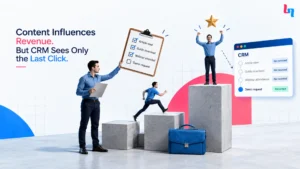
At Banter Marketo, I would link together the LinkedIn Campaign Manager, GA4 and CRM together.
Using UTM tracking and lead qualification rules, I would look at conversion rates of leads, cost per qualified lead, number of opportunities accepted into sales and value of pipeline generated from LinkedIn.
This helps to understand what content is attracting the right buyers, and which campaigns are actually driving sales opportunities.
This can help to drive marketing budgets to the right areas based on commercial performance.
Successful B2B lead generation on LinkedIn isn’t about getting as many leads as possible but about creating opportunities that have a real chance of converting to revenue.
The next step is putting these insights into a practical 30-day LinkedIn lead generation plan.
A Practical 30-Day LinkedIn B2B Lead Generation Plan
Understanding what activities on LinkedIn produce quality leads is useful, but to really improve you need to implement the changes consistently.
I would start the first 30 days at Banter Marketo by setting out a plan to attract the right buyers, improve conversions and see real business results.
Week 1 – Audit your audience and LinkedIn profile.
Define your ideal customer, review your existing content and ensure that you are receiving the right engagement from key decisionmakers. Audit your LinkedIn profile, landing pages and enquiry process to understand where buyers may be falling out of the funnel.
Week 2 – Develop buyer centric content.
Create content around specific business problems. The content should include expert opinion, technical details and trustworthy evidence to support your content. Ensure it fits with your buyers’ needs.
Week 3 – Create opportunities to convert. Implement relevant CTAs, engage with interested buyers and run targeted LinkedIn campaigns.
Week 4 – Review your quality enquiries, conversion rates and opportunities in your CRM to understand what areas you should invest more in.
The goal isn’t to guarantee leads within 30 days. It’s to build a repeatable LinkedIn lead generation process that connects content performance with measurable business growth.
Conclusion: Turn LinkedIn Attention into Real Business Opportunities
Generating B2B leads on LinkedIn is not simply about creating more content and gaining followers.
It’s about targeting the right decision-makers, gaining their trust and providing a reason to look into your business.
I believe at Banter Marketo that each part of LinkedIn should be used with intent, from creating buyer-centric content, optimising profiles, having engaging conversations and tracking quality sales opportunities.
This will help you turn LinkedIn into a relationship platform to generate potential business.
Engagement is only the start, turning this into quality leads will create value.
If you are gaining engagement through your LinkedIn content but not enough targeted business inquiries, then check out our digital marketing services at Banter Marketo to help improve your content, targeting and conversion strategy.
Before putting this strategy into practice, a few common questions about LinkedIn B2B lead generation deserve clear answers.
Frequently Asked Questions About LinkedIn B2B Lead Generation
1. How can I generate B2B leads on LinkedIn without paid ads?
I recommend targeting decision-makers, sharing valuable content, optimizing your profile, and building genuine connections to generate organic leads.
2. What type of LinkedIn content generates the most B2B leads?
Industry insights, practical guides, technical explainers, and real case studies help establish credibility and attract potential buyers.
3. How long does LinkedIn B2B lead generation take?
Results vary depending on your audience, content quality, and sales cycle. I recommend reviewing performance after the first 30 days.
4. Are LinkedIn Lead Gen Forms better than landing pages?
Lead Gen Forms simplify inquiries, while landing pages provide detailed information. I recommend testing both to identify which generates better-quality leads.
5. How do I measure LinkedIn lead generation ROI?
I track campaign costs, qualified leads, sales opportunities, and attributed revenue using LinkedIn analytics, GA4, and CRM data.