

B2B buyer journey content is often planned around publishing targets rather than buyer questions. A typical B2B company writes eight blogs, twelve LinkedIn posts, and two case studies a month.
It should help buyers understand their problems, evaluate solutions, and make informed purchasing decisions.
Their website traffic grows, their LinkedIn posts get good engagement, and the marketing department has every reason to be pleased with the numbers.
The sales department, however, still gets the same questions from prospects: How exactly does the solution work?
What sets them apart from the competition? Why should they choose this product over another? Where does the disconnect happen, and what can you do about it?
Driving traffic to your website is one part of the equation.
The other part is that your website helps the buyer make the purchase. And it appears that it doesn’t happen often enough.
It’s a part of the B2B content marketing strategy that many companies miss. They create content, and it gets views, but not the right views.
Not the ones that move the prospect to the next stage in the buying journey.
When buyers first start looking for answers, they don’t know what to ask. They are looking for information that will help them identify the problem.
Someone who knows what they want and is looking for justification for a choice will ask different questions.
They might want to know how your product differentiates from the competition.
At Banter Marketo, my first step to content creation is looking at what questions prospects are actually asking during the sales process.
Does the website answer these questions? Does it go enough into detail? Can the buyer easily compare your offering with that of your competitors?
I think B2B content marketing should be geared towards making the sale easier. It should give the prospect enough reason to choose you over your competitors.
Your content could be good, but it doesn’t influence the sales process. So, the question is, how can companies identify the gaps in their content creation and marketing strategy?
Why Does B2B Content Fail
To Influence Buying Decisions?
A B2B buyer at the beginning of their journey will have different questions than one who is already comparing pricing and preparing to close.
What often happens is that many companies are publishing content, posts and case studies without regard to where they are in the buying process.
Certainly, this drives traffic to your website, but does it help move that potential buyer to actually buy?
According to the Content Marketing Institute’s 2025 B2B Content Marketing Research, 39% of B2B marketers who scored their content marketing as only moderately effective or lower, cited a lack of content marketing strategy that supports the buyer’s journey as a root cause.
The question we must ask ourselves is: are we writing content that is relevant to our customers’ journey or what we want to write about?
Let’s use a cloud services company as an example. They’ve already written a number of articles extolling the virtues of the cloud and its benefits.
These articles are great for someone just becoming acquainted with the technology and what it can do.
But would a CIO considering cloud migration really want to read the same article?
What they probably want to know is the cost of migration, potential security issues, implementation timelines, and whether the investment is worth it.
If the CIO cannot find the answers to those questions on your website, they will go and find them – on your competitor’s site.
Here’s what I would do at Banter Marketo: first, I would first identify the questions that a qualified lead asks depending on where they are in the sales cycle.
Then, I would analyze the existing content to see what questions were being asked and what content was being used to answer them.
For example, an article outlining a business problem might be followed by an article or page that compares the various solutions side-by-side.
On the other hand, someone who already knows what they are looking for might want to read a case study or an in-depth analysis of how a solution works.
I think B2B content marketing should do more than entice prospects and customers to come to your website – it should help them learn, understand their options and make better buying decisions.
However, before we can determine what content to create, we need to understand the process our customers go through when determining a need, researching solutions, evaluating their options and hopefully, buying from us.
So, what does the B2B buyer journey look like and how can we insert the various content types to influence the outcome?
Understand How the B2B Buyer Journey Works

Before writing the contents for different buyer journey stages, it is essential to understand how B2B buyers make their buying decisions.
Contrary to the approach of ordinary consumers, companies should engage in an extended decision-making process where they thoroughly discuss the available buying options with the stakeholders, evaluate the costs and benefits of their implementation, and analyse potential risks and vendors to ensure they make the right choice.
According to Gartner’s 2026 B2B Buyer Survey, 67% of B2B buyers prefer a purchasing experience that does not involve a sales rep. What does it imply for businesses that want to get new customers?
They should provide the information necessary to make a confident purchase decision without contacting the sales team.
The B2B buyer journey is generally divided into three stages: awareness, consideration, and decision.
In the first stage, buyers define the problem and start looking for answers. In the second, they analyse the available solutions and choose the best value option.
Finally, in the decision stage, buyers evaluate vendors, identify risks, and ensure the profitability of the purchase.
For example, a CIO who wants to reduce cloud infrastructure costs may research why cloud costs are increasing in general at the awareness stage.
Next, at the consideration stage, they will compare the available options to resolve the issue, and at the decision stage, analyze the implementation costs and risks.
As you can see, the same buyer journey can be applied to different goods and services. At Banter Marketo, I would create a B2B content marketing strategy based on the most frequent questions during the decision-making process.
I would not assume that all the website’s visitors are at the same stage as in the example above.
It happens that buyers skip one stage and go back to it later or share the information from the awareness stage with the stakeholders who are at the decision stage.
The questions are, how can companies identify different buyer segments, and what information do they need at each stage of the journey?
And the answer is that it is challenging for businesses to predict what a prospective customer will search for next.
Define Your Ideal Customer Profile and Map Buyer Questions
Understanding the B2B buyer journey is important, but do you know who is actually involved in making the purchase?
Many companies create content for an entire industry without thinking about the different people involved and what each of them wants to know.
Take a cloud services company working with large businesses, for example.
A CTO might want to know how the technology works and whether it can support future growth. A CFO, on the other hand, would be more interested in how much it costs and whether the investment is worth it.
Meanwhile, an IT security director would probably have questions about compliance and how the company’s data will be protected.
They’re all looking at the same solution, but they’re not looking for the same answers. Each person needs enough information to feel confident about supporting the purchase.
According to the 2025 Edelman–LinkedIn B2B Thought Leadership Impact Report, 79% of the hidden decision-makers surveyed in the U.S. said that they are more inclined to buy from companies that demonstrate a consistent ability to publish high-quality thought leadership articles.
Therefore, it is critical to acknowledge the importance of targeting not only the buyers but also other decision-makers. Moreover, companies that do not publish articles aimed at generating demand may find themselves losing out on major sales.
At Banter Marketo, my first step would be to determine the ideal customer for the company.
In this case, I will have to identify the industry, company size, and roles within the target company as well as the challenges faced by this group of people and their level of involvement in the buying process.
This information will enable me to create an ideal customer profile.
The second step would be to identify the questions that these customers ask.
In this case, I will have to consult sales representatives, customer success specialists, and relationship directors to determine the most common questions that arise when a potential customer is looking for a vendor.
In addition, I will have to research the questions on Google to identify the ones that have not been addressed by our team.
After that, I would combine the ICP and frequently asked questions (FAQs) into a B2B content marketing strategy that would align the prospects’ interests with the company’s offerings.
Educational content marketing enables firms to build a sustainable sales pipeline by addressing different buyer roles and promoting their options.
In fact, the entire B2B content marketing effort must revolve around buyers’ needs and interests.
The first step is to research the questions that prompt potential clients to seek solutions. Next, it is necessary to develop content that directly addresses these inquiries.
For instance, many buyers at the awareness stage ask for general advice, such as how to identify their problem or the possible outcomes if it remains unresolved.
This is when educational content marketing comes into play.
Therefore, the B2B content marketing strategy must reflect the changing interests of the target audience, as well as the different roles that buyers play in the decision-making process.
Awareness Stage: Create Content That Helps Buyers Recognize Their Problems
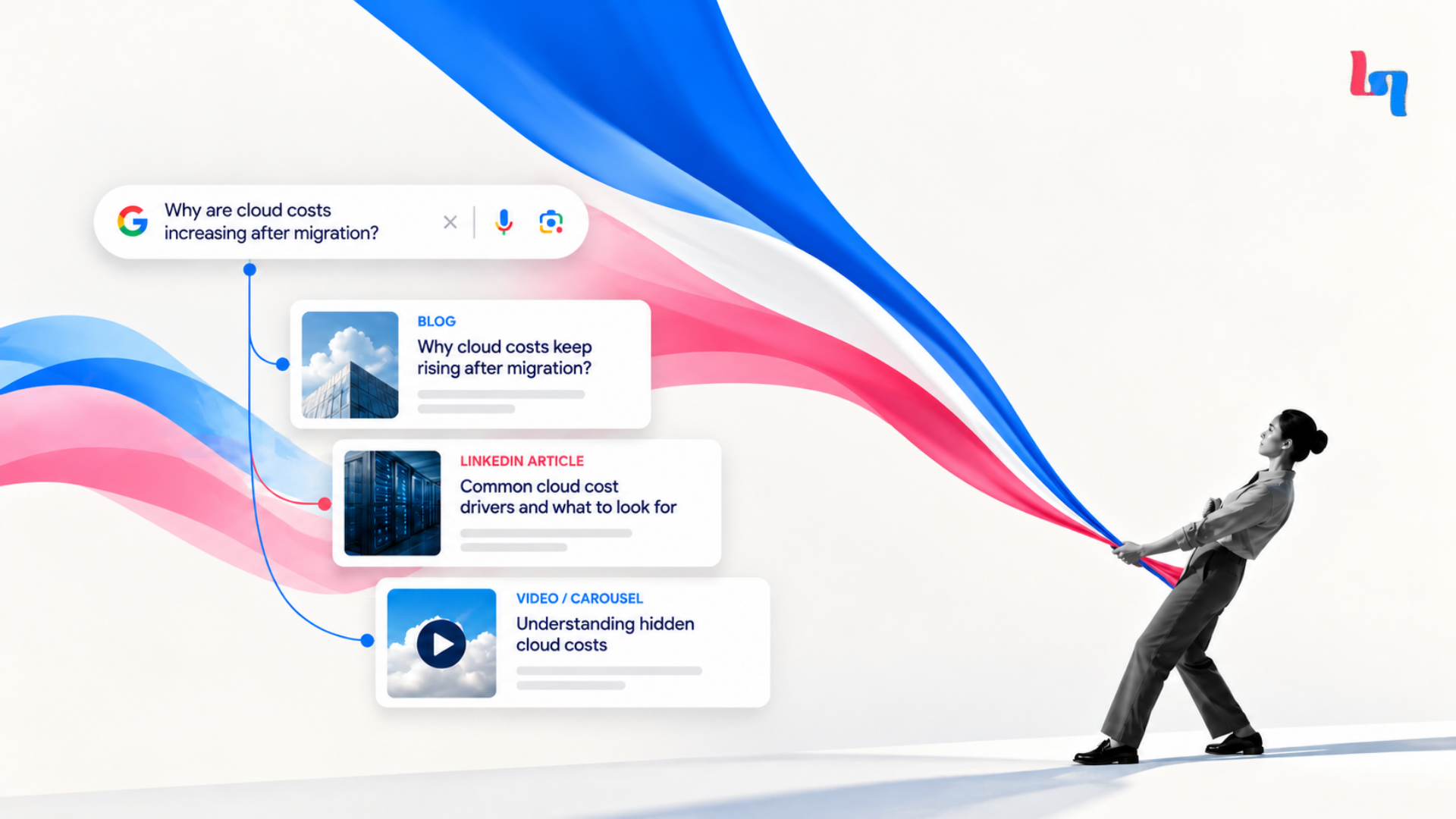
Once I figured out who my ideal clients were and the questions on their minds, I would educate them before they even came to me.
This is the awareness stage in the B2B buyer’s journey.
Here, potential clients recognize that they have a challenge but are yet to identify its source.
According to the Content Marketing Institute’s 2025 B2B Content Marketing Research, 87% of the B2B marketers surveyed believe content marketing helped them build brand awareness in the past year.
But making interesting content is not enough to get your target audience to come to you. You need to create content that addresses the questions in your buyer’s mind.
For instance, if I identified a CIO concerned about rising cloud costs after migrating to the cloud, I would not create content about the benefits of cloud computing.
Instead, I would create content that addresses why enterprise cloud costs keep increasing after the migration.
At Banter Marketo, I would create content that addresses the pain points of the buyer persona.
Within the framework of a B2B content marketing strategy, I would develop SEO blog posts that address the root causes of the problem, LinkedIn thought leadership articles that address various viewpoints within the industry, and videos or carousels that help explain convoluted concepts.
Moreover, I would include related articles for the readers to delve deeper into the subject while emphasizing that the business is a helpful source of information and not necessarily pushing them to reach out to the sales team.
This way, the buyer persona discovers the brand as a trusted resource before even entertaining the idea of browsing through different vendors’ offerings.
However, addressing the problem is only one side of the coin.
The buyer now understands the issue but does not yet have an idea of how to resolve it. Rather, right now, they have an open mind, and the right kind of content can influence their decisions.
So, what kind of content does the buyer need at this stage?
Consideration Stage: Create Content That Helps Buyers Compare Solutions
Now that the buyer understands your problem, he begins to search for potential ways to address it.
This is the consideration stage – the buyer compares the available solutions and looks for the most appealing choice in terms of technology and budget.
As per Gartner’s 2025 B2B Buyer Survey, 73% of respondents identified calling irrelevant suppliers as an effective way to screen out bad options, so your job is no longer to convince the “CIO to speak with you.”
Instead, you should provide the buyer with the information necessary to make his choice.
Going back to your example with the CIO who wants to reduce cloud infrastructure costs, now it is clear that he probably searches for information about which option is more better: optimize the current cloud spending, re-architect the infrastructure according to the workload, or switch to a hybrid cloud solution.
An article about the reasons why cloud costs increase will not be useful to him right now.
At these stages, buyers look for detailed comparisons of the options, including costs, level of complexity, security, and other factors.
At Banter Marketo, my primary responsibility would be to answer the questions that buyers ask related to the proposed solutions.
As part of the B2B content marketing strategy, I would create comparison articles, technical briefings, webinars, and solution briefs that shows the benefits of one over the other.
For example, I could write a blog post that compares cloud optimization and hybrid infrastructure, points out the one benefits over the other, and covers the financial considerations the buyer faces when making the decision.
I would ensure that the information is supported by the appropriate case studies and technical articles that buyers could use to evaluate the options.
At this point, I have to note that my responsibilities would end at providing the required information.
The final decision, in this case, would be made by the buyer based on the information and the considerations listed above.
Therefore, the choice that the buyer makes cannot be used to indicate whether the provided information is sufficient.
With that said, the questions I would ask to get a better idea about the requirements of this audience would be related to the information that they want to receive.
It is essential to ensure that the provided information helps the buyers make the decision; however, they also want to ensure that they choose the right provider.
In that case, I would ask for your feedback about the information that can help them decide if my company is the right choice.
Decision Stage: Create Content That Helps Buyers Choose With Confidence
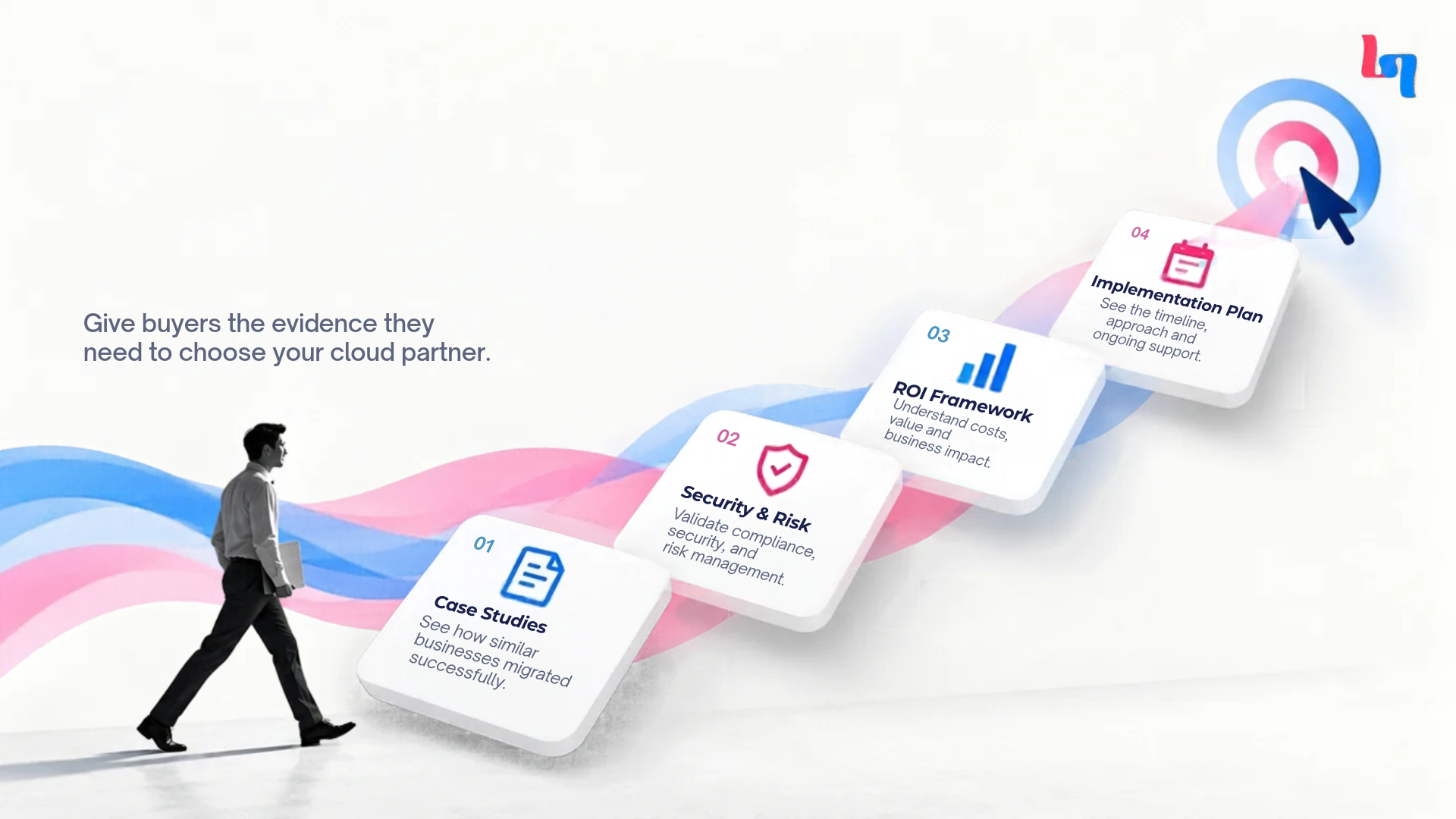
Once buyers have done their comparative analysis, the next stage in the B2B buying process is evaluating whether their prospective provider can fulfill their expectations.
This is where they investigate the supplier’s credentials, analyze the terms of sale, assess the risks and benefits of the agreement, etc.
According to the 2025 Edelman–LinkedIn B2B Thought Leadership Impact Report, 53% of the surveyed US decision-makers stated that impactful thought leadership reduces the importance of brand recognition when selecting a vendor.
In other words, a lesser-known company can attract clients by proving that it understands their needs better than competitors.
Let’s get back to the CIO searching for a cloud modernization partner.
Having reviewed the options, they are now facing the prospect of selecting a provider that will be able to navigate the complexity of migrating their data to the cloud while minimizing downtime and costs and ensuring security.
Would another article extolling the virtues of cloud storage be helpful in this scenario? Not really.
Instead, the CIO will benefit greatly from reading a case study analyzing the company’s infrastructure, how their previous client managed to avoid disruptions during the transfer of information, and the overall timeline of the project.
At Banter Marketo, I would develop content based on the questions that buyers ask before selecting a specific vendor.
I would incorporate case studies, product demonstrations, service descriptions, ROI frameworks, and implementation guides that could help the target audience identify the value that a company could bring to the table and how it could be integrated into their operations.
I would embed links to related client case studies and encourage would-be buyers to set up a consultation after they have been educated on the offerings of the company, not compel them to move to the next level of the sales ladder.
Solely developing informative articles for the sake of promoting one’s services is not an effective way of engaging in B2B selling.
I would rather address the concerns that potential clients have when they are already in the process of determining what vendor to select and support them in making their choice and justifying it to the decision-makers.
However, even though the creation of content for the awareness, consideration, and decision stages is important, it only addresses half of the marketing equation.
Following the buyer’s journey, to provide the tools for them to access additional information, relate it to their needs, and follow the appropriate links to get closer to selecting a specific organization to fulfill their requirements.
Therefore, how could companies utilize their content to assist buyers in navigating the purchasing process?
Connect Content Across the Entire B2B Buyer Journey
Creating content for awareness, consideration and decision stages plays a crucial role in the marketing strategy.
But what is the point of creating valuable content if the buyer has to “go on their own journey” to find the answers to their questions?
Even the best articles in the world will not bring any value if the reader cannot find the next relevant piece of content.
According to the Content Marketing Institute’s 2025 B2B Content Marketing Research, 45% of surveyed B2B marketers stated that it was challenging to create content that aligns with the buyer’s journey.
That is why it is essential to make your articles interconnected and allow easy traversal between them following the buyer’s journey.
For example, a CIO wondering about soaring cloud costs can look for an article explaining the reasons behind the rising expenses.
Then, he/she can follow the link to the article about cloud optimization vs hybrid infrastructure and understand what steps should be taken.
After that, it makes sense to provide the option to book a call and share the case study about a similar project.
Each article should be written in a way that answers the next question the buyer has, not one that repeats what they already know.
At Banter Marketo, I would make internal links to the relevant articles, calls-to-action, follow-up calls and emails, and LinkedIn content distribution about the specific topic.
I would analyze the CRM content to see what buyers read about and what content they are engaging with behind the scenes before they set up a discovery call with us.
The goal is to make it easy for the buyer to find what they need based on their evolving questions, while reducing pressure to talk to the sales team before they are ready.
Let’s imagine that we are helping a potential customer move from initial research to evaluating options.
Here is what that might look like in a B2B buying journey
From First Search to Vendor Selection: A Practical B2B Content Journey

A CIO realizes that despite a successful transition to the cloud, their infrastructure costs continue to rise.
Before contacting a service provider, they research the web why this may be happening.
By reading an article, they learn why cloud costs increase after migration.
However, they still don’t know how to reduce these costs, so they click a link from an article that provides a comparison of cloud optimization, workload redesign, and hybrid infrastructure.
In their search for a suitable option, the CIO studies the costs, security aspects, and benefits of each particular case.
Having identified a viable solution, they go to the website of the selected company, read the case study, and look at the company’s approach to addressing their issue.
Then, the CIO schedules a discovery session to learn more about their capabilities.
This is just an example of how a B2B buyer would go through the funnel towards making the purchasing decision, not an actual campaign that would be launched by the client.
At Banter Marketo, I would use the blog, comparison guides, and case studies together to help buyers, rather than treating them as separate platforms, making sure each one answers a different question and moves the buyer toward the next step in their decision-making process.
I would also begin to use educational content and link it to relevant client case studies and analyze engagement data from the website and CRM to identify what content resonates with the buyers most.
This approach would help the client in get more qualified leads and enable the sales team to engage in better conversations with the buyers.
However, getting buyers to read your content is only half the battle; how can one be assured that the engagement is translating into enough quality leads, i.e., those willing to provide the contact details, and eventually purchase your product or service?
Measure B2B Content Performance and Sales Pipeline Influence
A buyer might stumble upon your blog and then proceed to revisit it to read your comparison guide, before finally getting back to look at your case study and booking an introductory discovery session — but how would your marketing team know what specific piece of content encouraged the visitor to become a qualified lead?
According to the Content Marketing Institute’s 2025 B2B Content Marketing Research, 56% of the surveyed B2B marketers who had content performance analytics capabilities in place admitted that understanding ROI (return on investment) was challenging.
And the same percentage of marketers struggled with being able to track the customer journey.
The example of our hypothetical cloud service company above illustrates how a particular article might drive targeted traffic to the website via Google, encouraging the visitor to come back and read more to compare the options available on the market and eventually rely on a case study to make a final decision and book a consultation.
But for the cloud service company selling its services across multiple channels, counting the number of impressions and page views would only give a limited view of the impact that its content was capable of driving.
This is why it is also important to assess the conversion rate of the lead nurturing process within the marketing funnel and whether the generated leads are ultimately closed as revenue once they reach the sales team.
At Banter Marketo, I would evaluate the performance of content based on its contribution to specific stages in the buyer’s journey.
For the awareness stage, I would consider relevant Google search impressions and engagement with the content on the website.
For the consideration stage, I would analyze the return visits and articles’ helpfulness.
Finally, for the decision stage, I would review qualified enquiries, sales opportunities, and the impact on the pipeline.
In addition, I would combine Google Search Console, GA4, UTM Parameter tracking, and CRM data to assess the content’s contribution to the abovementioned stages as a part of a digital marketing strategy.
When it comes to my personal opinion on the role of B2B content marketing, it should drive traffic to the company’s website.
However, I would be interested in seeing which content pieces drive leads to the website and whether they have the capacity to generate revenue.
Now that we have discussed what to measure and why, let’s take a closer look at how to operate with this information.
It would be wise to develop a 30-day content plan to begin with.
A Practical 30-Day B2B Content Implementation Plan
Once the most in-demand content that drives the leads is identified, the next step is determining the best place and time to publish the material.
In this situation, if I were to work at Banter Marketo, I would invest the first 30 days in developing the content strategy aligned with the buyer’s needs rather than focusing on a high quantity of published articles.
Week 1 – Auditing the Existing Content and Understanding Buyers’ Needs: In the first week, I would analyze the existing blogs, case studies, and content published on social media to identify what type of content buyers are interested in and what information they lack.
It may be helpful to rely on sales, CRM, and Google insights to prioritize the topics.
Week 2 – Creating an Outline Based on Buyers’ Journey: In the second week, I will organize the identified topics, articles, and white papers based on the awareness, consideration, and decision stages.
The goal is to ensure that every piece of content addresses a specific question and guides the buyer to the next stage.
Week 3 – Developing and Distributing the Content: The third week will be focused on creating the most prioritized content elements and publishing them with the addition of internal links.
The produced material can be distributed through LinkedIn, email, and search.
Week 4 – Measuring Engagement and Refining the Strategy: In the fourth week, I would review the engagement metrics, quantity of quality prospects, and qualified enquiries received from the produced content and RFI.
This data will become the basis for improving the content strategy and publishing new material.
Overall, the plan lets the company build an efficient process it can use every month to support the buyer’s journey at every stage and boost sales of its products.
Conclusion: Create B2B Content That Helps Buyers Move Forward
Good B2B content marketing isn’t about how many articles a business publishes.
What matters is whether the content answers buyers’ questions and helps them decide what to do next.
At Banter Marketo, I would focus on connecting content across the buying journey.
The idea is to help people understand their problems, compare their options, and feel more confident about choosing a solution.
If your website gets visitors but the content isn’t helping them make buying decisions, Banter Marketo’s content marketing services can help you create content around what your buyers actually need.
But before putting together a strategy, let’s look at some common questions businesses have about creating content for the B2B buyer journey.
Frequently Asked Questions About B2B Buyer Journey Content
- What type of content works best at each stage of the B2B buyer journey?
Awareness-stage content explains problems, consideration-stage content compares solutions, and decision-stage content provides evidence through case studies, demonstrations, and implementation details.
- What is the difference between TOFU, MOFU, and BOFU content?
TOFU builds awareness, MOFU helps buyers evaluate solutions, and BOFU supports final purchasing decisions. Each serves a different purpose within the buyer journey.
- How do I map B2B content to the buyer journey?
I would identify the ideal customer profile, collect common buyer questions, and organize relevant content around awareness, consideration, and decision stages.
- How often should a B2B company publish content?
There’s no fixed publishing frequency. I recommend prioritizing useful, well-researched content that answers buyer questions rather than maintaining a high posting volume.
- How do I measure B2B content marketing success?
I would track organic traffic, relevant engagement, qualified enquiries, sales opportunities, and influenced pipeline using Google Search Console, GA4, and CRM data.